Visual Strategy: Mastering Digital Marketing Elements
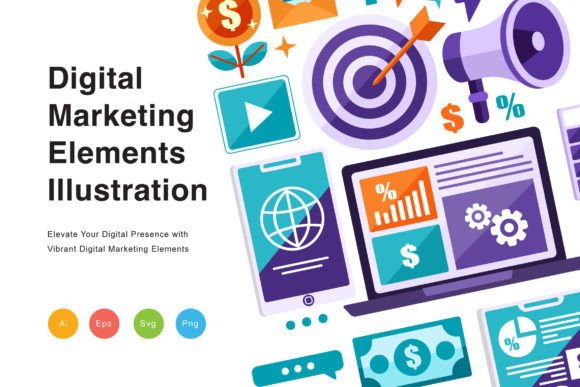
In the crowded landscape of online communication, words alone often fall short. To truly capture attention and convey complex strategies quickly, you need a visual language that speaks directly to the modern user. This is where the Digital Marketing Elements Vector Illustration set becomes an indispensable asset. It is more than just a collection of icons; it is a cohesive visual toolkit designed to bridge the gap between abstract marketing concepts and tangible user engagement.
At its core, this illustration set is built on a foundation of clarity and modern aesthetics. The visual characteristics are defined by clean lines, vibrant yet balanced color palettes, and a style that feels contemporary without being trendy in a way that will date quickly. The personality of these graphics is approachable and professional, striking a balance between corporate reliability and creative energy. This makes the Digital Marketing Elements Vector Illustration set incredibly versatile, capable of fitting into a serious financial report just as easily as a dynamic social media campaign.
Practical Applications Across the Creative Spectrum
Understanding where these assets fit best is key to maximizing their value. Because the files are provided in EPS, AI, SVG, and PNG formats, the utility extends far beyond a single platform. For web designers, the SVG files are perfect for responsive website headers, ensuring crisp rendering on any screen size without bloating load times. Marketers can leverage the PNG versions for quick social media posts, using them to visualize engagement metrics or content strategies in blog graphics.
For those involved in brand identity and logo design, these elements offer a way to build out a brand’s visual ecosystem beyond the primary mark. They serve as secondary graphics that support the main logo, reinforcing the brand’s presence in presentations and pitch decks. In the realm of editorial design and publishing, these illustrations break up dense blocks of text, guiding the reader’s eye and improving information retention. Even for physical products, such as packaging design for tech startups or educational materials, these vectors provide a scalable, high-quality solution that maintains integrity from a billboard to a business card.
Enhancing Communication and Hierarchy
The primary function of any graphic asset is to aid communication, and this is where the Digital Marketing Elements Vector Illustration set truly shines. By incorporating these visuals, you immediately influence the readability of your content. A complex marketing funnel is much easier to understand when accompanied by a clear, stylized diagram. This creates a stronger visual hierarchy, allowing you to emphasize key points without relying solely on bold text or larger fonts.
Furthermore, consistent use of a specific illustration style contributes significantly to brand perception. When your emails, website, and slide decks all share the same visual language, it projects an image of organization and professionalism. This consistency fosters trust with your audience, whether they are potential clients or internal stakeholders. It transforms generic content into a polished narrative, enhancing audience engagement by making the material more digestible and visually stimulating.
Integration with Typography
Pairing these illustrations with the right typeface is crucial. Because the illustrations are modern and clean, they work exceptionally well with a sans serif font for body copy, which maintains a sleek, digital-first feel. For headers, a bold display font can create a striking contrast that draws the eye. If your brand leans more traditional, pairing the vectors with a classic serif font can add a touch of authority and timelessness. The goal is to ensure the font pairing complements the illustration style, creating a harmonious modern typography layout rather than a visual clash.
Strategic Implementation and Best Practices
To get the most out of this collection, treat these assets as integral parts of your design system rather than afterthoughts. Start by identifying the specific pain points in your current visual strategy. Are your reports boring? Use the analytics-themed vectors to add context. Is your website lacking personality? Integrate the social media and networking icons to humanize the interface.
When selecting which elements to use, consider the context of the creative font or text they will accompany. Ensure the scale of the illustration is proportional to the typography. A massive graphic next to a small caption can look unbalanced. Instead, aim for a layout where the text and image support each other. For instance, use a vector of a megaphone next to a call-to-action in a bold script font or handwritten font to create a personal, urgent feel, or use a data chart vector next to a structured premium font to convey hard facts.
Remember that these are design assets meant to be customized. While the PNGs are ready to use, the vector formats (AI and EPS) allow you to adjust colors to match your specific brand identity guidelines. This level of customization ensures that the illustrations feel native to your project rather than stockpiled. By integrating these elements thoughtfully, you elevate your content from simple information to a compelling visual experience, ensuring your digital marketing efforts are not just seen, but remembered.